


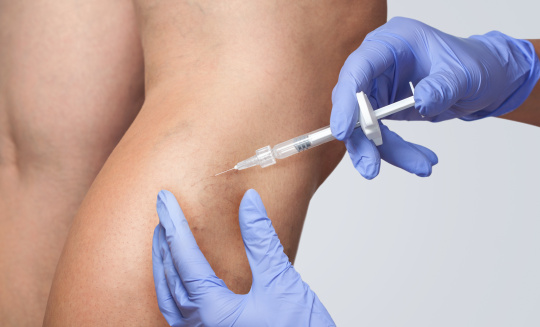
Vascular spider veins
Vascular spider veins, also called telangiectasias in medical literature, are a very common health and cosmetic problem. Currently, thanks to the use of sclerotherapy, it is possible to treat them effectively and minimally invasively. Vascular changes in the form of dilated capillaries, commonly known as broken capillaries on the legs, although not always in many cases they are only an aesthetic problem. However, it is worth remembering that their appearance may be the first sign of a deeper problem.
Bursting blood vessels on the legs - symptoms of circulatory disorders
Since they are the result of circulatory disorders, it is worth paying attention to whether they are accompanied by other symptoms that predict future health problems, including:
- cramps and pain in the calf muscles (especially in the evening and at night),
- a feeling of heaviness in the legs not associated with increased effort,
- swelling of the ankles
- quick fatigue of the legs,
- tingling, burning and throbbing sensation in the legs.
In order to start the correct treatment, it is necessary to find out why the blood vessels in the legs are rupturing. In many cases, genetic predisposition is the source of the problem. The shallow arrangement of the vessels is then an inherited anatomical feature.
However, there are more potential reasons for the formation of spider veins on the skin:
- hormonal disorders (hence a greater tendency to form spider veins during pregnancy, menopause, and in women using hormonal contraception);
- large temperature fluctuations - the expansion and cracking of blood vessels are favored by high frosts and heat;
- some diseases that negatively affect blood flow in the vessels, e.g. hypertension, diabetes,overweight and obesity;
- excessive load on the lower limbs - wearing high-heeled shoes, too tight pants, frequent crossing of the leg, lack of exercise, excessive body weight.
Effective methods for blood vessels:
Laser therapy
The least invasive method of controls on the legs. Currently, wine is considered the most effective and therefore the most popular. The treatment involves irradiation with a laser in which spider veins appeared. The laser enables precise closing of blood vessels on the legs. During the procedure, however, there may be pinching signs that occur when the light beam comes into contact with the skin.
Sclerotherapy
Spider veins are also removed with sclerotherapy. During this procedure, a suitable preparation is made to the sick vessel with a thin needle. It has an end cap for closing broken lines. Sclerotherapy is usually carried out in the form of several treatments, taking place at intervals of 3-4 weeks. The procedure is painless, but sometimes the inconvenience may be unclear (the need to give up hot baths and saunas, wearing special tights).
The process of closing the vessel takes about 3-4 weeks, the next few weeks are needed for the body to absorb the fibrotic vessel. Depending on the extent of the changes, sometimes 4 to 6 treatments are needed to obtain satisfactory results.
Anti-varicose tights against spider veins - does it work?
Chronic venous insufficiency is an irreversible process, which means that we can only stop the progression of the disease at one of its phases and try to prevent the transition to the next one. Pharmacological therapy combined with compression therapy gives us a good chance of not worsening the problem .
- Prophylactic pressure of 13-17 mmHg is recommended for people who work while standing, who, apart from leg pain at the end of the day, often have a problem with ankle swelling that disappears after a night's sleep.
- Pressure class 1 anti-varicose tights - 18-21 mmHg - are recommended for the first symptoms of venous ailments - for problems with spider veins on the legs, constant pain in the legs, edema and the first venous changes.
- Compression grade 2 anti-varicose stockings (pressure 23-32 mmHg) are used in people with venous insufficiency of superficial and deep vessels, after sclerotherapy and in pregnant women who have problems with veins.
- Grade 3 anti-varicose tights (pressure 34-46 mmHg) are used to support the treatment of venous edema and ulcers, while compression class 4 (<46 mmHg) is used in advanced post-thrombotic changes.